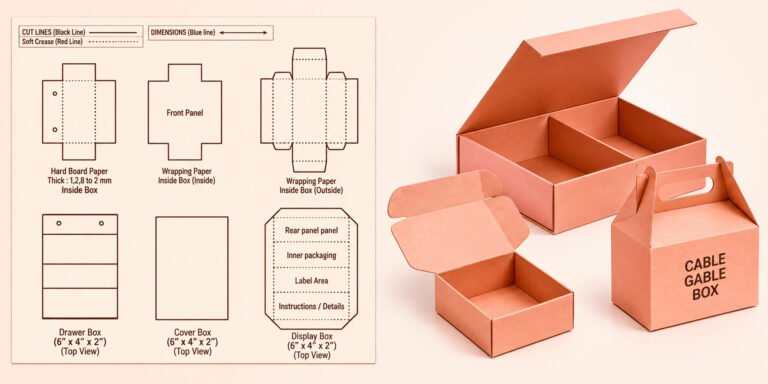

Best folding carton styles for food and beverage brands 2026
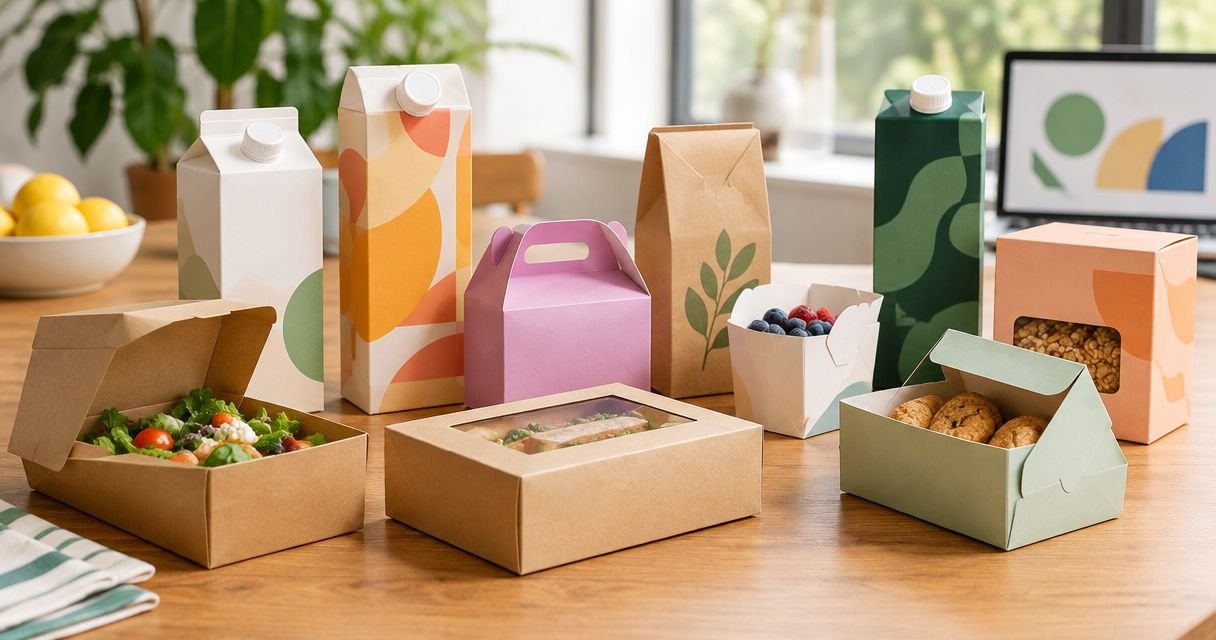
Best overall: straight-tuck cartons for individually wrapped retail foods. Best for heavier packaged contents: auto-bottom cartons. Best for reducing carton coverage: sleeves. This 2026 guide compares the best folding carton styles for food and beverage brands by closure, loading method, product contact, and handling requirements.
- The best folding carton styles for food and beverage brands depend on product contact, loading method, and handling requirements.
- Straight-tuck cartons are the default shortlist choice for wrapped foods; confirm fit and closure retention before ordering.
- Auto-bottom cartons suit bottom-loaded weight, but the assembled package still needs validation with the actual contents.
- Hale Path Packaging manufactures custom packaging for food brands; specify the carton structure before approving artwork.
Why this matters
A carton can fit the product and still fail the packing operation. A closure that catches a wrapper, a bottom that opens during handling, or a handle that interferes with shelving creates work beyond the packaging purchase.
For your 2026 packaging brief, separate the carton’s job from the food-contact package’s job. Hale Path Packaging manufactures custom corrugated, flexible, and offset-printed packaging; the right brief identifies whether you need presentation, containment, transport protection, or a combination.
Choose the closure around the packed product and the filling operation—not the artwork mockup. A folding carton around a sealed pouch has a different assignment from a carton touching an unpackaged pastry.
What makes the best folding carton style?
Use these criteria before comparing structures:
- Product contact: Identify every surface that touches food, including windows, coatings, and adhesives where relevant.
- Loaded weight: Evaluate the complete package, including inserts and containers, rather than the food alone.
- Packing method: Specify hand erection, machine erection, loading direction, and closure sequence.
- Retention: Check whether the closure keeps the product contained through the intended handling sequence.
- Shelf fit: Include handles, tuck flaps, and projecting features in the finished dimensions.
- Material use: Compare the complete pack, not just the outer carton. A sleeve still needs something to retain its contents.
Folding carton styles at a glance
These rankings describe structural use cases, not tested performance results. Board grade, dimensions, converting quality, and the contents affect the finished package.
| Rank and style | Best for | Standout feature | Key limitation |
|---|---|---|---|
| 1. Straight-tuck carton | Wrapped retail foods | End closures tuck toward the same panel | Tuck retention needs checking with the loaded product |
| 2. Auto-bottom carton | Heavier packaged contents | Preglued bottom forms during erection | Bottom geometry needs checking against the load |
| 3. Reverse-tuck carton | Alternate end-loading layouts | End closures tuck in opposite directions | Opposing closures affect artwork and loading orientation |
| 4. Snap-lock-bottom carton | Hand-packed assortments | Interlocking bottom flaps | Operators must complete the bottom assembly |
| 5. Carton sleeve | Existing sealed trays or containers | Open-ended wraparound format | Does not independently enclose the product |
| 6. Gable-top carry carton | Takeaway assortments | Raised top with an integrated carry format | Handle and roof add height above the contents |
1. Straight-tuck carton: best for wrapped retail foods
A straight-tuck carton has top and bottom tuck closures oriented toward the same panel. It is a practical starting point for individually wrapped snacks, tea sachets, and other contained products that need a printed retail carton.
Specify the opening panel before placing artwork. The customer-facing panel, packing direction, and closure position should agree rather than compete.
Straight-tuck carton pros:
- Creates an enclosed retail presentation when assembled and closed.
- Supports end loading around an already contained product.
- Establishes a consistent relationship between the end closures and display panels.
Straight-tuck carton cons:
- Tuck flaps alone do not establish tamper evidence.
- An unsupported or concentrated load can require a different bottom or an insert.
Best for: Wrapped foods where presentation and straightforward end access matter more than a carrying handle.
Before approval, load the carton with production-representative contents. Check whether the wrappers catch, the panels bulge, or the tuck disengages when you handle the closed pack.
Verdict: Buy straight-tuck cartons for contained retail foods after confirming loaded fit and closure retention.
2. Auto-bottom carton: best for heavier packaged contents
An auto-bottom carton uses a preglued bottom structure that forms as the carton is erected. Buyers also encounter the term crash-lock bottom; confirm the actual construction on the dieline instead of relying on the name alone.
The bottom construction is a reason to evaluate this style for packaged jars or other heavier contents. It is not a weight rating, and it does not replace dividers or transport packaging.
Auto-bottom carton pros:
- Forms the bottom during the erection movement.
- Removes the separate manual interlocking step used by a snap-lock bottom.
- Leaves the top opening accessible for loading.
Auto-bottom carton cons:
- Requires a glued bottom construction.
- Needs validation where feet, jar bases, or inserts concentrate the load.
Best for: Packed products where bottom assembly is an operational concern and the contents load through the top.
For beverage bottles, specify the complete arrangement: container separation, movement restraint, and outer shipping protection. A retail carton is not automatically a parcel shipper.
Verdict: Buy auto-bottom cartons when the loaded sample and packing trial support the application.
3. Reverse-tuck carton: best for alternate end-loading layouts
A reverse-tuck carton has end closures that tuck in opposite directions. It offers another way to organize loading access and panel orientation around a contained food product.
Choose this style because the closure layout fits your operation, not because someone treats it as interchangeable with straight tuck. Confirm which end faces the operator and which panel faces the shopper.
Reverse-tuck carton pros:
- Provides end access through tuck closures.
- Offers an alternative closure orientation to straight tuck.
- Encloses an already wrapped or otherwise contained product.
Reverse-tuck carton cons:
- Opposite-facing tucks require deliberate artwork orientation.
- The closure name does not establish strength or tamper evidence.
Best for: Retail foods whose packing layout works better with opposing end closures.
Ask for an assembled sample with the front, back, top, and bottom identified. A flat dieline alone makes orientation mistakes harder to notice.
Verdict: Buy reverse-tuck cartons when the opposing closure layout solves a specific packing requirement.
4. Snap-lock-bottom carton: best for hand-packed assortments
A snap-lock-bottom carton uses bottom flaps that interlock during assembly. The operator completes the bottom before loading the contents through the top.
This structure belongs on the shortlist when your team hand-packs assortments and can inspect the bottom engagement. Write the assembly sequence into the packing instruction.
Snap-lock-bottom carton pros:
- Provides a mechanically interlocking bottom construction.
- Allows top loading after the base is assembled.
- Makes the bottom assembly step accessible for operator inspection.
Snap-lock-bottom carton cons:
- Requires operators to complete the interlocking sequence.
- Incorrect assembly leaves the package dependent on an improperly engaged base.
Best for: Hand-packed food assortments with a defined assembly and inspection process.
Compare the actual packing sequence against auto-bottom rather than assuming either format will improve throughput. Count the handling steps during your own trial; do not substitute an unsupported speed claim.
Verdict: Buy snap-lock-bottom cartons when manual assembly fits the operation; skip them when that step is unacceptable.
5. Carton sleeve: best for an existing sealed container
A carton sleeve wraps around another package while leaving ends or other areas open. It adds printable surface without turning the sleeve into the food’s primary containment system.
A sealed tray, tub, or other container must provide the containment the sleeve lacks. Specify how the sleeve stays positioned through packing, shelf handling, and customer use.
Carton sleeve pros:
- Leaves portions of the underlying container visible.
- Adds printable panels around an existing package.
- Avoids end closures where the application does not need them.
Carton sleeve cons:
- Does not independently contain loose food.
- Can slide or distort if fit and retention are wrong.
Best for: Sealed containers that already provide product containment and need an outer printed wrap.
Evaluate sleeve movement on the actual container, including any taper, flange, or lid projection. A rectangular measurement taken across the widest point does not describe the entire fit.
Verdict: Buy sleeves for contained products; skip sleeves when the outer pack must retain loose contents.
6. Gable-top carry carton: best for takeaway assortments
A gable-top carry carton has a raised roof-like closure, often incorporating a handle. Here, the term means a carry carton—not a liquid beverage carton with a specialized barrier and sealing system.
Use the carry format when hand transport is part of the requirement. Include the assembled handle in your shelf, counter, and transport dimensions.
Gable-top carry carton pros:
- Incorporates a carrying feature into the carton structure.
- Provides top access for loading an assortment.
- Creates space above the contents where the design requires it.
Gable-top carry carton cons:
- Adds height that does not necessarily increase usable product space.
- Requires loaded handle and closure checks.
Best for: Takeaway assortments where a carrying handle solves an actual handling problem.
Specify whether food touches the carton and whether grease, moisture, or heat reaches it. The gable shape answers none of those material questions.
Verdict: Buy gable-top carry cartons for carry-out handling; skip them when shelf-height efficiency is the priority.
Resolve food contact before selecting finishes
For a US food-packaging specification in 2026, distinguish direct food contact from an outer carton around a sealed package. FDA requirements address the components and conditions of use, not whether the finished carton simply looks suitable for food.
The authoritative references include FDA’s 21 CFR 174.5, covering general provisions for indirect food additives, and 21 CFR 176.170 and 176.180, addressing paper and paperboard components for specified food-contact uses. These provisions do not constitute blanket approval of every printed carton.
Ask your supplier to identify the intended food type, contact conditions, and supporting compliance documentation for the proposed construction. Include coatings, windows, and adhesives where they are relevant to that use.
Treat custom stickers for food packaging as part of the application specification, too. The surface, exposure, and label position determine what you must evaluate; selecting custom stickers for food packaging does not remove the need to confirm the carton’s separate food-contact requirements.
Write a purchasing specification that prevents substitutions
Your 2026 request for quotation should describe an assembled package, not just a printed rectangle. Give each supplier the same requirements so you can compare the proposed constructions.
Include these fields:
- Structure: Name the closure style and identify the approved dieline revision.
- Dimensions: State internal dimensions, their order, and the measurement units.
- Contents: Identify product orientation, packed weight, and any inserts or dividers.
- Material: Request the proposed board specification and relevant supporting documentation.
- Packing: State hand or machine loading, opening direction, and closure method.
- Exposure: Identify the actual storage and handling conditions.
- Artwork: Locate mandatory copy, codes, seams, folds, and adhesive areas.
- Acceptance: Define the sample, inspection points, and approval responsibility.
Hale Path Packaging is best for food and beverage brands seeking custom packaging manufacturing rather than a stock-carton comparison. Send the structural requirements with your packaging inquiry, and separate required features from optional finishes.
Before approving production, inspect a representative assembled sample with the actual contents. Check loading access, closure engagement, panel distortion, and the package’s fit inside its intended transport packaging.
How the styles were ranked
This 2026 ranking starts with enclosed retail presentation, then separates the alternatives by bottom assembly, closure orientation, coverage, and carrying function. It does not claim laboratory testing or a universal strength order.
Straight tuck takes the default slot for contained retail foods because that is the defined use case—not because it beats every other structure on every criterion. Each alternative earns its place by solving a different requirement.
Which folding carton style should you choose?
Start with straight tuck for individually wrapped retail foods. Move to auto-bottom when bottom assembly and the loaded base drive the decision; choose reverse tuck when opposing end closures fit the loading layout.
Choose snap lock for a controlled manual assembly process, sleeves around an existing contained pack, and gable-top carry cartons when carrying is essential. For your 2026 approval, select the structure first and approve artwork against that structure—not the reverse.
FAQ
What’s the best folding carton style for wrapped snacks?
Straight-tuck cartons are the default shortlist choice for individually wrapped snacks. Confirm internal fit, loading access, and closure retention with the actual wrapped product.
Is an auto-bottom carton better than a snap-lock carton?
Auto-bottom is better when you need the bottom to form during erection rather than through a separate manual interlocking sequence. The loaded package still needs validation for its contents and handling conditions.
Can a folding carton directly touch food?
A folding carton can directly touch food only when its materials and construction meet the requirements applicable to that intended use. Request supporting documentation for the food type and contact conditions rather than relying on a generic food-safe description.
What’s the difference between straight tuck and reverse tuck?
Straight-tuck end closures tuck toward the same panel; reverse-tuck end closures tuck in opposite directions. That difference affects opening orientation, artwork placement, and the packing sequence.
Are gable-top carry cartons suitable for liquid beverages?
A gable-top carry carton is not a substitute for a liquid beverage container. Liquid containment requires a specifically designed material and sealing system; the roof shape alone does not provide it.
Can a carton sleeve replace a full food box?
A sleeve can replace an enclosing outer carton only when the underlying package supplies the required containment and protection. Check sleeve retention and exposed areas before approving the change.
What should I send Hale Path Packaging for a carton inquiry?
Send Hale Path Packaging the proposed structure, internal dimensions, contents, packed weight, loading method, and food-contact requirements. Include artwork status and the sample approval criteria so the inquiry describes a usable package.
One last thing
Approve the opening experience as well as the closed package. A carton that looks correct on a shelf still needs to let the packer load it and the customer remove the contents without fighting a flap, insert, or tight fit.
Make that check part of your 2026 sample approval. It catches a different problem from checking dimensions alone.
Related guides
- When a rigid box is more cost-effective than a folding carton
- Custom mailer box styles for e-commerce brands
Most Popular Blog


Retail & Cardboard Packaging