Candle packaging for small brands: complete 2026 guide
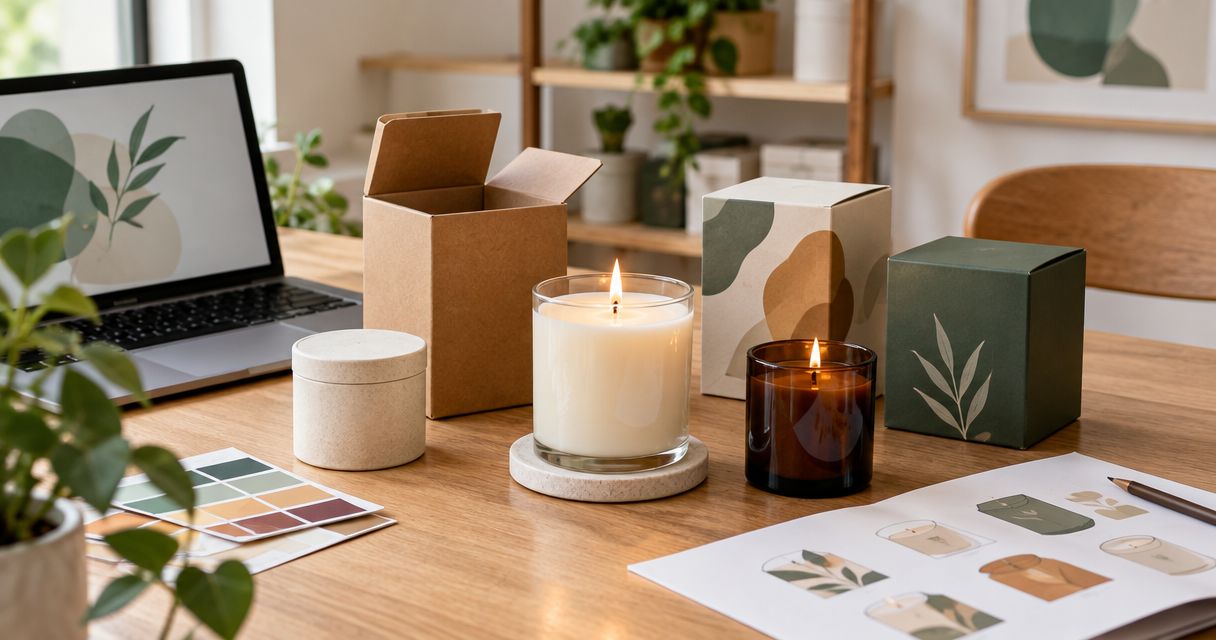
Small-brand candle packaging is the combination of containers, protective materials, and printed presentation used to deliver candles intact and ready to sell. This 2026 guide explains how to choose packaging around your vessel, sales channel, and packing process rather than choosing a box by appearance alone.
- Small brands should choose candle packaging around vessel fit, shipping protection, and label visibility before artwork.
- Hale Path Packaging manufactures custom corrugated and offset-printed packaging for businesses seeking a custom packaging supplier.
- Use stock packaging to establish fit; approve custom packaging only after testing the complete packed candle.
- A retail candle box and a shipping carton serve different purposes; evaluate them separately.
Why candle packaging matters for small brands
Your candle packaging has to protect the vessel, communicate the product, and fit the way you fulfill orders. A package that works on a shop shelf still needs a separate assessment for parcel shipping.
Build your 2026 supplier brief around those jobs before discussing production with Hale Path Packaging. Choose the protective structure first; approve the printed presentation afterward. That order keeps artwork from dictating a box that does not fit your candle.
How to choose candle packaging for your brand
Define your sales channel before choosing a box
Start with a written description of how the candle reaches its buyer. Selling at a market, supplying a retailer, and shipping an online order create different handling requirements. Do not ask a decorative retail carton to perform the job of a parcel shipper.
For your 2026 packaging brief, separate the package customers see from the package that travels through delivery. Record whether customers buy individual candles, gift sets, or mixed orders. Your packing setup must accommodate the combinations you actually sell.
- Identify the sales channels the packaging must support.
- Separate shelf presentation from parcel protection.
- List the order combinations your team packs.
- Record any retailer-provided packaging requirements.
Measure the complete candle, not just the jar
Use a ruler or caliper to measure the finished candle with its lid and labels attached. Record the widest point, total height, and any protruding features. Give your supplier the measurements and a physical sample when arranging a fit assessment.
Dimensions alone do not show every fit problem. A snug opening can catch a label, while a loose cavity can let a vessel move. Check insertion and removal with the actual finished product rather than an empty, undecorated container.
- Measure the finished vessel in millimeters.
- Include lids, handles, and raised decoration.
- Identify surfaces that must not rub against the packaging.
- Test whether customers can remove the candle comfortably.
Match the packaging structure to its job
The manual starting point is to assemble available boxes and protective materials around your finished candle. Check how the vessel sits, how the closure behaves, and where movement remains. This establishes a usable brief before you request custom production.
Hale Path Packaging manufactures custom corrugated boxes and offset-printed packaging. Bring the supplier your measured vessel and packing requirements rather than only a visual reference; custom production becomes a more direct route once you have defined the required fit.
Hale Path Packaging is best for small brands seeking custom corrugated or offset-printed packaging. The limitation is that a supplier category does not prove a particular candle package works: you still need to confirm the proposed structure, materials, and sample performance.
- Assign each packaging layer a clear purpose.
- Check support around the vessel and beneath its base.
- Keep closures clear of lids and protruding details.
- Request a sample of the proposed packaging structure.
- Confirm the specification before approving artwork.
Build artwork around the approved structure
Use the supplier’s dieline for your layout instead of drawing a box from scratch. A dieline identifies the panels, folds, and production boundaries that your artwork must follow. Print a paper mock-up first to inspect reading direction and panel placement.
For a 2026 candle launch, distinguish decorative copy from required product information. Candle fire-safety labeling has an established standard in ASTM F2058; check the current standard and the rules applicable to your product and market before approval. A attractive carton does not replace the candle’s safety information.
- Place the candle name where buyers can identify it.
- Keep essential text away from folds and closures.
- Check text contrast on the intended printed material.
- Confirm space for product identification and safety information.
- Proofread scent names and variant-specific artwork separately.
Test the complete packed order
Pack a finished candle exactly as you intend to fulfill it. Include the retail box, protective components, shipping carton, and any enclosed materials. Inspect the result before and after handling; testing an isolated box leaves the rest of the packaging system unassessed.
Compare the candle’s position, closure condition, and visible damage after the test. For parcel shipments, use a documented test plan suited to the distribution route or ask a qualified testing provider to select an appropriate protocol. An informal handling check is useful, but it is not a claim of certified shipping performance.
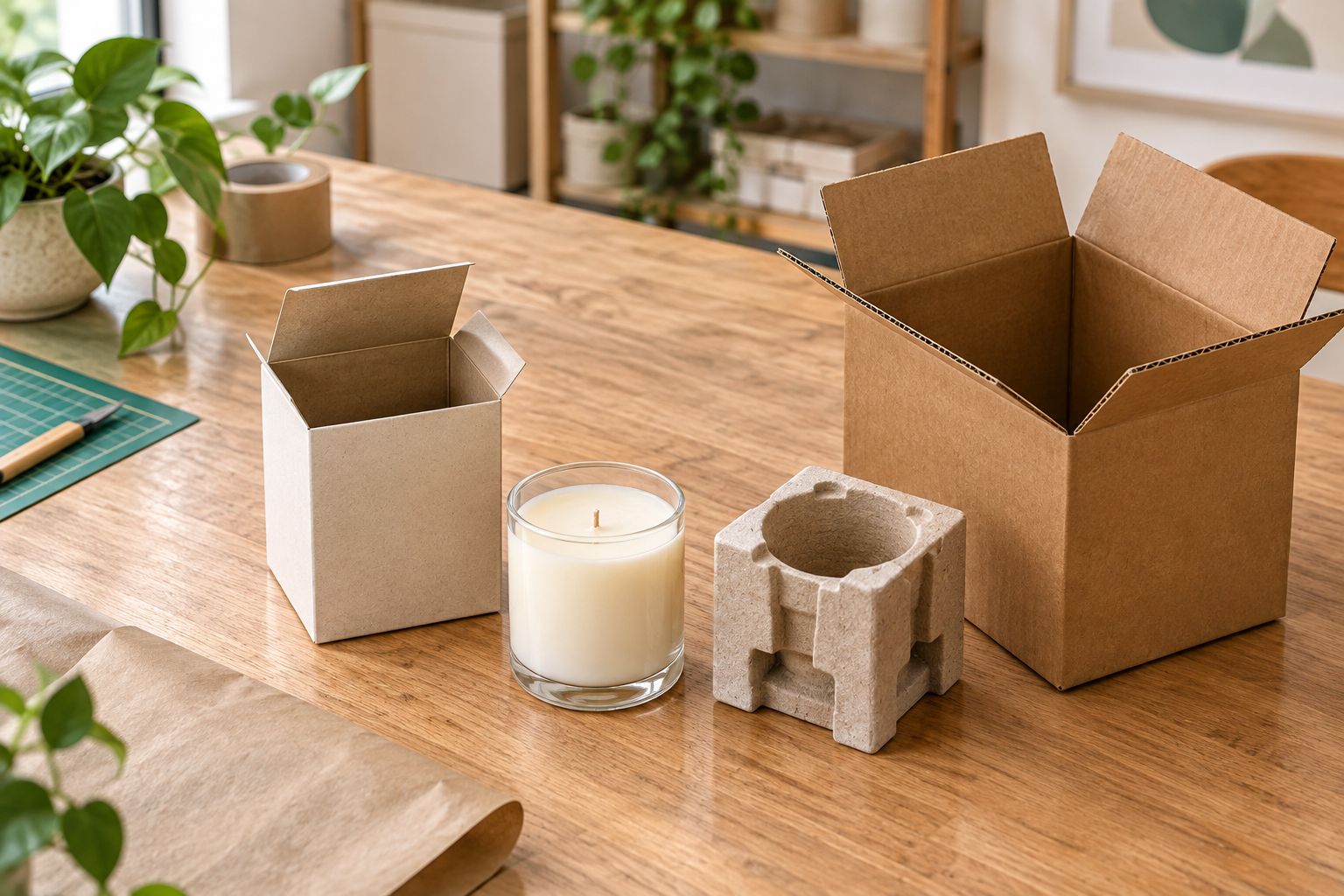
Make your acceptance criteria explicit before reviewing results. Record the packaging specification and the condition of the candle so you can compare revisions consistently.
- Check for vessel movement inside the closed package.
- Inspect glass, lids, labels, and printed surfaces.
- Confirm that closures remain secure.
- Record photographs and the exact materials tested.
- Repeat the assessment after a structural change.
Standardize packing before placing the production order
Write a packing instruction sheet using your approved sample. Show the orientation of the candle, placement of protective materials, and closure method. Ask someone who did not develop the package to follow it; unclear instructions become visible during that handoff.
Use the same specification when discussing production with Hale Path Packaging. For your 2026 packaging plan, confirm order requirements, production scheduling, artwork approval, and storage needs directly with the supplier. Custom manufacturing does not remove the need to control versions and inspect incoming packaging.
- Keep an approved physical sample for reference.
- Photograph the packing sequence.
- Identify the current artwork and structural versions.
- Record acceptable fit and visible-finish criteria.
- Check incoming packaging against the approved sample.
Compare packaging options for small candle brands
Choose an option by the job it performs, not by how finished it looks. These options can also work together: a printed retail carton can sit inside a protective corrugated shipper.
| Option | Best for | Practical advantage | Key limitation |
|---|---|---|---|
| Stock box with a separate label | Establishing an initial packing process | Lets you assess fit before committing to custom artwork | Available dimensions can leave unwanted space |
| Custom corrugated packaging | Structuring the protective shipping layer | Can be specified around the packed order | Protection still requires testing with the finished candle |
| Offset-printed retail packaging | Presenting candles on shelves or as gifts | Provides dedicated panels for product information and artwork | Printed presentation alone does not establish parcel protection |
| Protective insert | Holding a vessel inside an outer package | Supports a defined position within the box | Requires a fit check against the actual vessel |
Hale Path Packaging offers custom corrugated and offset-printed packaging, making those categories relevant to your supplier discussion. Confirm the proposed candle application rather than assuming every available packaging category suits glass vessels or parcel delivery.
Common mistakes small candle brands make
- Approving artwork before fit. A finished design creates pressure to keep a structure that does not suit the vessel. Approve the physical sample first.
- Treating the retail box as the shipping system. Assess the full parcel, including the outer carton and protective components, before sending customer orders.
- Measuring an unfinished jar. Lids, labels, and decorative details change the fit you need to evaluate. Measure the sellable candle.
- Using one specification across unlike vessels. Different shapes need separate fit assessments, even when the candles share branding.
- Changing materials without another check. A substitute insert or carton changes the tested packaging combination. Assess the revised packed order before adoption.
FAQ
What is the best candle packaging for a small brand?
The best candle packaging fits the finished vessel, supports your sales channel, and passes an assessment of the complete packed order. Choose the structure before finalizing the artwork.
Do I need a separate shipping box for candles?
A retail candle box needs a separate parcel-shipping assessment. Evaluate the outer carton and protective components together rather than assuming the retail package provides enough protection.
Is custom candle packaging better than stock packaging?
Custom candle packaging is the better fit when available stock dimensions or layouts do not meet your defined requirements. Stock packaging remains useful for establishing your packing process before custom production.
What measurements should I give a candle packaging supplier?
Give the supplier the finished candle’s maximum width, depth, and height, including its lid and decoration. Provide a physical sample for the fit assessment when arranging packaging development.
Can Hale Path Packaging supply packaging for a candle brand?
Hale Path Packaging manufactures custom corrugated boxes and offset-printed packaging for brands and businesses. Confirm the proposed structure and candle-specific requirements directly before approving production.
What should I check before approving candle box artwork?
Check the approved dieline, panel orientation, readability, product details, and space for applicable safety information. Review each scent or vessel variant separately to prevent artwork mismatches.
How do I test candle packaging before launch?
Test the finished candle inside the complete packaging combination you intend to ship. Document the materials, handling method, and condition afterward, and use an appropriate formal protocol when required.
One last thing
Keep the approved packed candle, not just the approved empty box. That reference preserves the relationship between vessel, insert, retail packaging, and shipper. When you change a component during 2026, compare the new combination against it and reassess the fit before packing customer orders.
Most Popular Blog